Life & Journey
“I changed roads. I did not change questions.”
The stages below are drawn from his own writing. Years that are not verified have been deliberately left blank — no date has been invented.
1956
Birth — Garoth, Mandsaur district
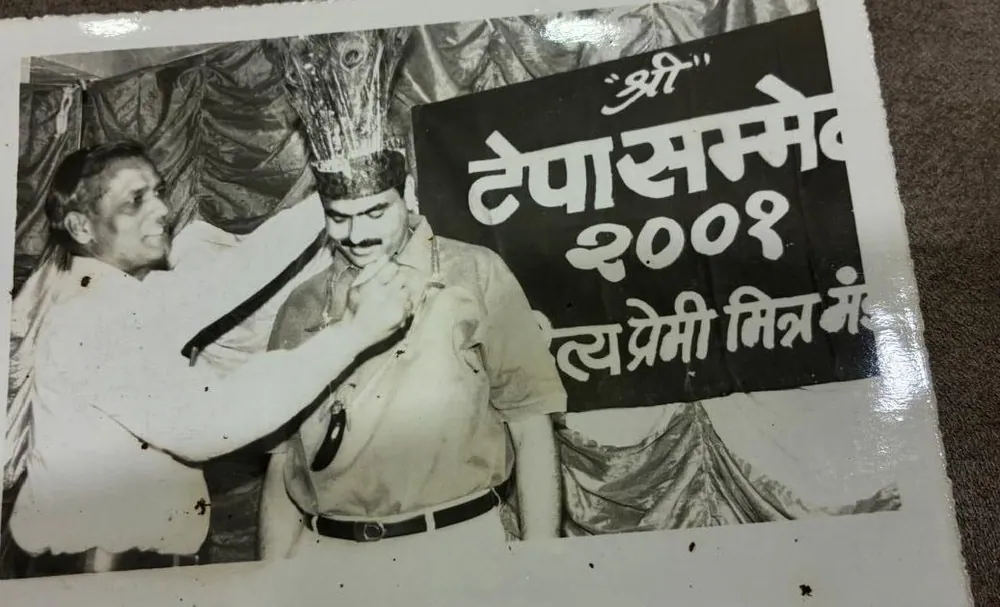
Born on 5 December 1956 in Garoth, district Mandsaur. His mother was Shrimati Menabai and his father Shri Badrilal Rammuji. His grandfather came originally from Kotputli in Rajasthan, and settled in Garoth.
Year unverified
Schooling — and a hunger for books
Up to class eleven at the government school in Garoth. He studied for his B.Com and MBA at home, sitting only for the examinations. From childhood he had a hunger for books. In those years he read Marx, Lenin and the Buddha, and was drawn to communism. He came into contact with communist leaders, and with thinkers of the Lohia school.
Year unverified
Fifteen years old — and the boycott
He stood against the exploitative order of his community from childhood. At fifteen he rose in the community panchayat against one of its decisions, and told its contractors to their faces that their verdicts were swayed by a shoe made of silver. He was cast out of the community. He was asked to apologise. He accepted the boycott — he did not apologise.
1975
The Emergency — and the years underground
When the Emergency was declared in 1975, his friend and mentor Comrade C. S. Surana was arrested by an administration angered by his raising of public grievances. Madan Agrawal went underground the same day. He spent the whole of the Emergency in hiding — in towns such as Lahar, Datia, Ron and Guna. In those years he came into contact with the Chhatra Yuva Sangharsh Vahini founded by Jayaprakash Narayan, and became active in it.
Year unverified
Janvadi Yuva Shakti — state president
After the Emergency, the Congress leader and Union Minister Shri Chandrajit Yadav left the party and formed the Janvadi Party. Madan Agrawal was made Madhya Pradesh state president of its youth wing, Janvadi Yuva Shakti. He held many public assemblies, on the pattern of a people's court.
Year unverified
Garoth–Bhanpura — the bribes returned
With S. N. Purohit, then a labour leader in Nagda, and other companions, he had bribes taken by officials in the Garoth–Bhanpura region returned to the people who had paid them.
Year unverified
From the visitors' gallery of the Assembly
In protest against being harassed and arrested by a police officer, he and his companions threw leaflets and raised slogans from the visitors' gallery of the Madhya Pradesh Legislative Assembly.
1984
Marriage — in a plain kurta-pyjama
He married Shrimati Vidya Agrawal, daughter of Shri Radhakrishna Agrawal of Piparia, a freedom fighter. When he went in his own wedding procession in 1984, he wore only a plain kurta and pyjama, while everyone else in the party had dressed up. It caused no little confusion: nobody took him for the groom, and because of his clothes people kept mistaking one guest after another for him.
Year unverified
Those who shaped him
It began with the writings of Marx, Lenin and the Buddha. He came into contact with thinkers of the Lohia school. And he was drawn, too, to much in Baba Amte, Gandhi and Vinoba.
Year unverified
Sannyas — and the same question
From the red flag to saffron cloth — only the road changed. The question stayed.
Still neededThe year of sannyas, the tradition, and under whose guidance — this is not yet on record.
Year unverified
Vicharon Ka Vidroh
Eight parts, forty-eight chapters. Two questions at the end of each — the book does not answer them.
Still neededYear of publication and publisher still to be confirmed.
For the editor